
Baidu OpenClaw Partnership with Peter Steinberger: AI Agent Sponsorships Open
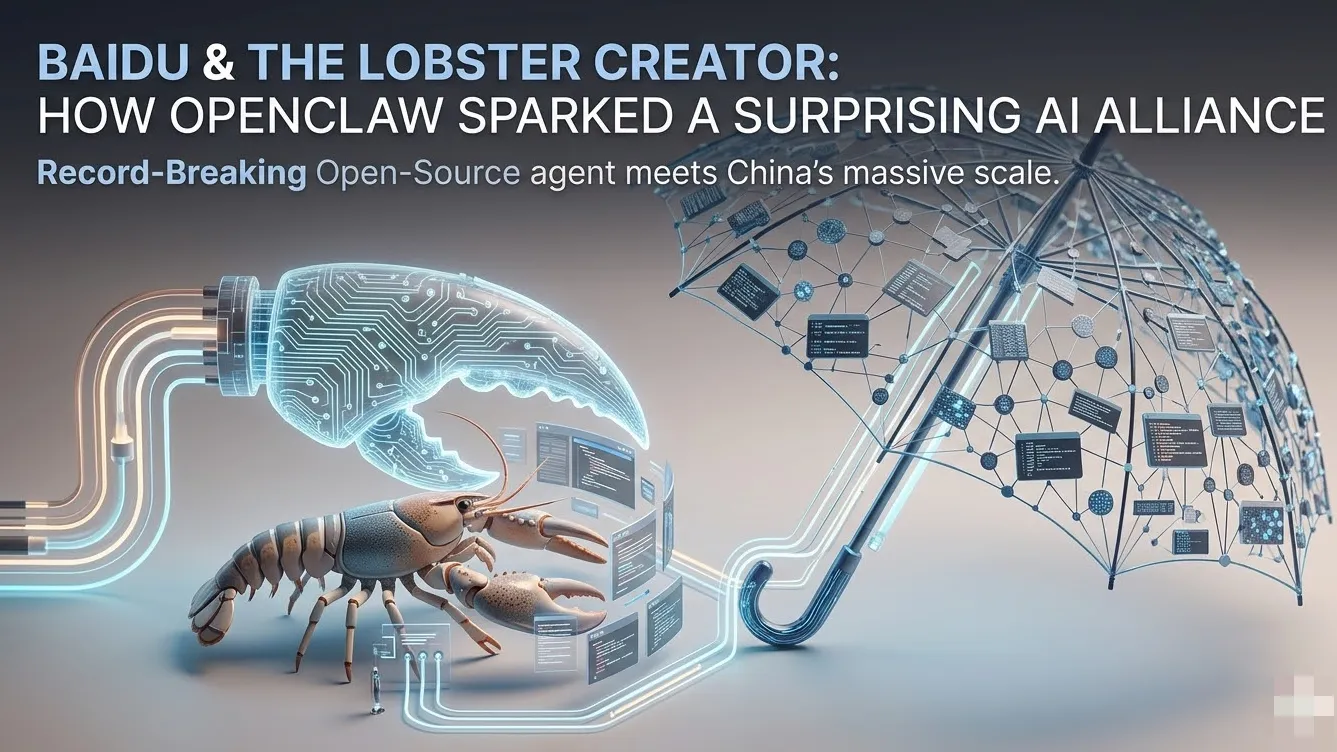
Key Takeaways
- Record-Breaking Growth: OpenClaw became GitHub's fastest-starred repository ever, surpassing Linux's lifetime achievements in just 100 days.
- Massive China Scale: Baidu's app integration delivered the open-source agent to roughly 700 million monthly active users.
- Direct Engagement: Baidu publicly thanked Peter Steinberger and confirmed interest in deeper collaboration beyond deployment.
- Open for Growth: The project explicitly welcomes maintainers and sponsorships, even as its creator joins OpenAI.
- Foundation Independence: OpenClaw stays fully open-source under a dedicated foundation model, mirroring successful Chromium-style ecosystems.
What Is OpenClaw? The Autonomous AI Agent Phenomenon
OpenClaw (formerly Clawdbot and Moltbot) is an open-source platform that empowers AI agents to handle complex, multi-step real-world tasks. Built initially by solo Austrian developer Peter Steinberger — known online as the ClawFather with his signature 🦞 lobster emoji — the system runs locally on devices while connecting to large language models via APIs.
Key capabilities include autonomous web browsing, code generation and debugging, email and calendar management, and file handling. It integrates seamlessly across messaging platforms such as WhatsApp, Telegram, Slack, and China's Feishu. Community feedback suggests its privacy-first local execution and cross-platform flexibility drove rapid adoption, turning a side project into the most discussed open-source AI initiative of 2026.
Baidu's Strategic Integration: 700 Million Users and Beyond
Benchmarks indicate OpenClaw's China dominance accelerated dramatically after Baidu embedded it directly into its flagship search app ahead of Lunar New Year. This move, alongside simplified deployment tools (including Baidu Cloud's one-click options), exposed the agent to an audience larger than the entire U.S. population.
Cloud providers, device manufacturers like Xiaomi, and domestic model companies quickly built compatible layers. Analysis shows this addressed early adoption friction points, enabling agents to plan and execute tasks at scale across e-commerce, search, and workplace tools. Nearly half of over 142,000 publicly tracked OpenClaw agents now originate from China, creating a unique ecosystem where open-source foundations power both local innovation and enterprise deployments.
The X Moment That Changed Everything: Gratitude and Open Doors
In a recent public exchange, Baidu Inc. replied directly to Peter Steinberger: "Thanks for the support! Happy to connect, let's talk 👀." This followed Steinberger's question about extending support from deployment to core development — met with Baidu's enthusiastic response highlighting impressive progress and plans for private follow-up.
Steinberger's reply captured the excitement: "Amazing. We're open for maintainers or sponsorships :)." The interaction demonstrates a rare alignment between a global AI leader and an independent open-source creator. Industry patterns show such direct outreach often unlocks funding, contributor networks, and accelerated feature development that proprietary projects rarely achieve.
Why This Alliance Feels Magical: China Adoption Insights and Comparisons
OpenClaw's trajectory stands apart from typical AI agent stories. While some closed-source tools encountered regulatory pushback, its open nature and device-local design resonated instantly in China's tech scene. Cloud giants, LLM startups, and hardware players all embraced it without hesitation, contrasting sharply with more guarded Western approaches.
Comparisons highlight advantages: unlike single-model agents, OpenClaw connects flexibly to any LLM API while maintaining user control. Edge cases include ongoing cybersecurity discussions around fully autonomous execution, yet real-world usage data shows strong productivity gains in coding, task automation, and personal organization.
Common pitfalls for early adopters — such as complex setup across messaging apps — were largely resolved through Baidu's integration tools. Advanced tips now circulating in developer communities include combining OpenClaw with local models for offline resilience or leveraging sponsorship channels for custom enterprise forks.
Future Outlook: Sponsorships, Maintainers, and the Agent Ecosystem
With Peter Steinberger moving to OpenAI to advance broader agent technology, OpenClaw's transition to an independent foundation ensures its core remains free and community-driven. Baidu's outreach positions the project for potential sponsorships that could fund dedicated maintainers, infrastructure, and new capabilities.
This model echoes successful open-core strategies, allowing giants like Baidu to build proprietary layers (such as enhanced deployment) while the community benefits from shared progress. The result could establish OpenClaw as the de facto standard layer for personal and enterprise AI agents worldwide.
Conclusion
Baidu's connection with Peter Steinberger and OpenClaw illustrates how a solo developer's vision can ripple across global tech giants in unexpected ways. The explicit openness to maintainers and sponsorships creates immediate opportunities for contributors to shape the next wave of autonomous AI.
Developers and organizations should explore the OpenClaw repository today and consider joining the growing contributor community to help drive this groundbreaking project forward.