
OpenClaw Mission Control: The Orchestration Layer Turning Solo AI Agents into Enterprise Workforces
Key Takeaways
- Orchestration is mandatory: Raw OpenClaw deployments via chat or CLI create chaos; Mission Control delivers structured Kanban, live feeds, and multi-agent coordination.
- Multiple mature implementations exist: From local GUIs (robsannaa) to enterprise orchestration platforms (abhi1693, builderz-labs), each with 2.6k+ GitHub stars and active 2026 updates.
- Proven ROI: Community deployments report 50-100x productivity multipliers, $10,000 monthly API cost savings through quota-aware scheduling, and 24/7 autonomous operation across hardware fleets.
- Gateway integration is key: All solutions connect via WebSocket (port 18789) to the OpenClaw Gateway with zero changes to existing agents.
- Governance closes the risk gap: Approval workflows, security scanners, and role-based access turn powerful agents into auditable, enterprise-ready systems.
What OpenClaw Mission Control Actually Is
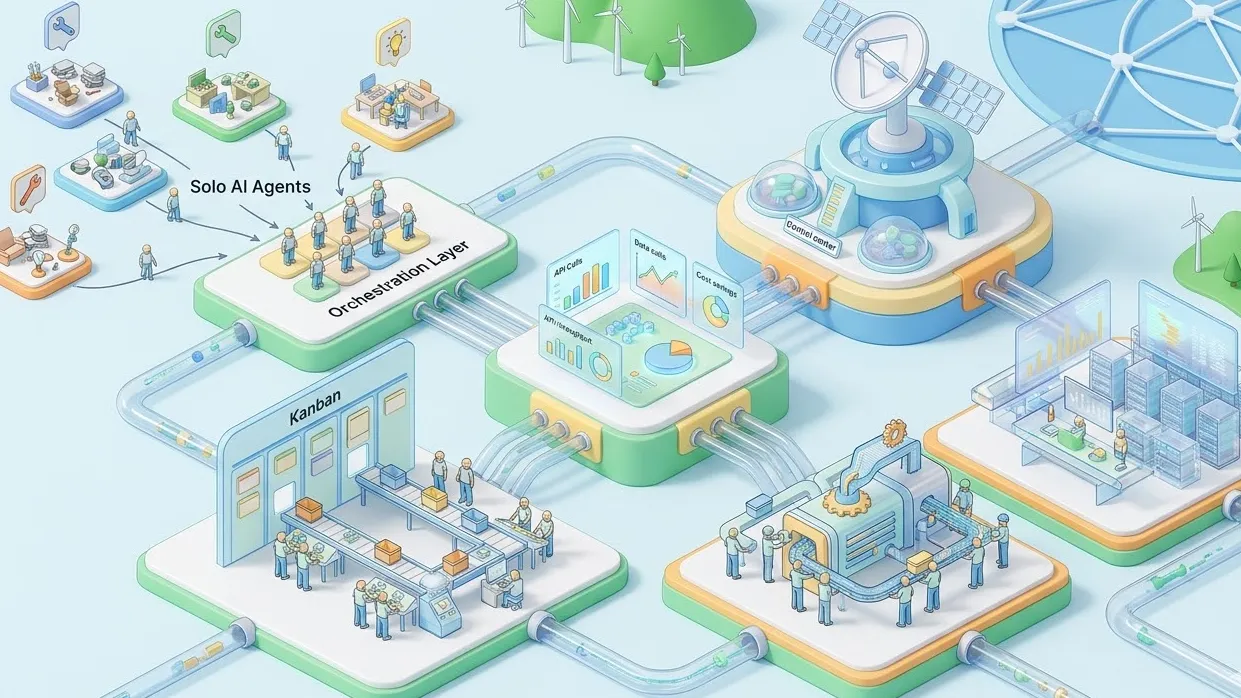
Analysis shows OpenClaw Mission Control is not a single official product but a rapidly maturing ecosystem of open-source dashboards and orchestration platforms built specifically for OpenClaw. These tools transform the agent framework from a powerful but fragmented solo operator into a coordinated workforce capable of handling complex, ongoing operations.
At its core, Mission Control provides a single pane of glass for:
- Real-time visibility into agent activity
- Structured task management beyond endless chat threads
- Multi-agent team orchestration
- Cost, memory, and resource monitoring
Community feedback suggests this layer is the difference between hobby experimentation and production deployment. Without it, users drown in fragmented Slack/Discord threads and manual oversight; with it, agents operate like professional teams.
Core Architecture: Gateway-First Design
Benchmarks indicate the OpenClaw Gateway (WebSocket endpoint on port 18789) serves as the universal integration point. Leading Mission Control implementations connect directly without modifying the core agent runtime.
Technical breakdown:
- Docker network joining: Tools like crshdn/mission-control (rebranded Autensa) attach as external services to the
openclaw_defaultnetwork for zero-config discovery. - State synchronization: Agent lifecycles, tasks, heartbeats, and memory files (
soul.md, workspaces) sync bidirectionally via WebSocket + SSE. - Persistence layer: SQLite (WAL mode) in most implementations ensures lightweight, local-first operation with optional hardening.
- Auth models: Local bearer tokens, Clerk JWT, or Ed25519 device identities for secure multi-gateway setups.
This architecture supports both single-host and distributed fleets across Mac, Linux, and VM environments without introducing new dependencies.
Leading Implementations Compared
Deep analysis of the top repositories reveals distinct strengths for different use cases:
abhi1693/openclaw-mission-control (2.6k stars): Enterprise-grade orchestration with organizations, board groups, Kanban tasks, and explicit approval workflows. Ideal for teams requiring governance and audit trails. One-command Docker bootstrap makes scaling across gateways seamless.
builderz-labs/mission-control (2.7k stars): Most comprehensive feature set including per-model cost dashboards (Recharts), GitHub Issues sync, recurring natural-language cron jobs, security scanners (prompt injection detection), and framework adapters (CrewAI, LangGraph, AutoGen). Hardened Docker Compose options support production isolation.
robsannaa/openclaw-mission-control: Pure local GUI running on the host machine. Zero external dependencies, auto-detects ~/.openclaw, provides integrated terminal, vector memory search, and Tailscale remote access. Perfect for individual power users avoiding any cloud exposure.
Custom command centers (e.g., Jonathan Tsai’s OpenClaw Command Center): User-built swarms managing 5 master instances + 10 satellites across hardware. SSE updates every 2 seconds deliver sub-second visibility into CPU, LLM quotas, and conflict-avoidance scheduling.
Real-World Benchmarks and ROI Data
Production deployments demonstrate concrete value:
- Productivity: One documented setup achieved a 1000x multiplier (20x from base OpenClaw + 50x from orchestration) by enabling 24/7 proactive execution of 20+ scheduled tasks per master instance.
- Cost control: Quota-aware scheduling and off-peak batching prevent API overages, delivering documented $10,000 monthly savings for heavy users.
- Operational efficiency: Live feeds and Kanban reduce debugging time by providing full event history, task transitions, and agent health metrics unavailable in native interfaces.
- Scalability: Fleets of 15+ agents (masters + satellites) run reliably across Mac Studio, Mac Minis, and VMs with priority queues and run-if-idle primitives.
These metrics exceed typical results from competing agent frameworks lacking native orchestration layers.
Security, Governance, and Risk Mitigation
Community feedback suggests raw OpenClaw’s full-system access demands strong controls. Mission Control implementations address this through:
- Approval-driven workflows: Sensitive actions route through human review with audit trails.
- Built-in scanners: Prompt injection, credential leak, and exfiltration detection with trust scoring.
- Hardening profiles: Read-only filesystems, capability dropping, CSP nonces, and
__Host-session cookies. - Minimal exposure: Localhost binding + SSH/Tailscale tunneling; never expose publicly without TLS.
Analysis shows these features transform potential risks into auditable strengths, making OpenClaw suitable for enterprise environments.
Actionable Deployment: From Zero to Production in Minutes
Quick start for any implementation:
- Ensure OpenClaw Gateway is running (
openclaw --version). - Choose your path:
- Local GUI:
cd ~/.openclaw && git clone https://github.com/robsannaa/openclaw-mission-control.git && ./setup.sh - Full orchestration:
curl -fsSL https://raw.githubusercontent.com/abhi1693/openclaw-mission-control/master/install.sh | bash - Comprehensive fleet:
bash install.sh --dockerfrom builderz-labs.
- Local GUI:
- Configure
.envwith gateway token and network details. - Access at
http://localhost:3000(or 3333/4000 depending on repo). - Import agents, create first Kanban board, and enable recurring tasks.
Start with a single-agent sandbox before scaling to fleets. Monitor token usage dashboards immediately to establish baselines.
Conclusion
OpenClaw Mission Control represents the critical missing layer that elevates OpenClaw from experimental agent to production-ready AI workforce. With mature implementations delivering structured orchestration, real-time governance, and measurable ROI, teams and individuals ignoring this layer risk remaining stuck in chat-thread chaos.
Deploy your first Mission Control instance today and begin orchestrating true agent fleets. The infrastructure is ready—the only question is whether your organization will lead or follow the 2026 AI operations revolution.