
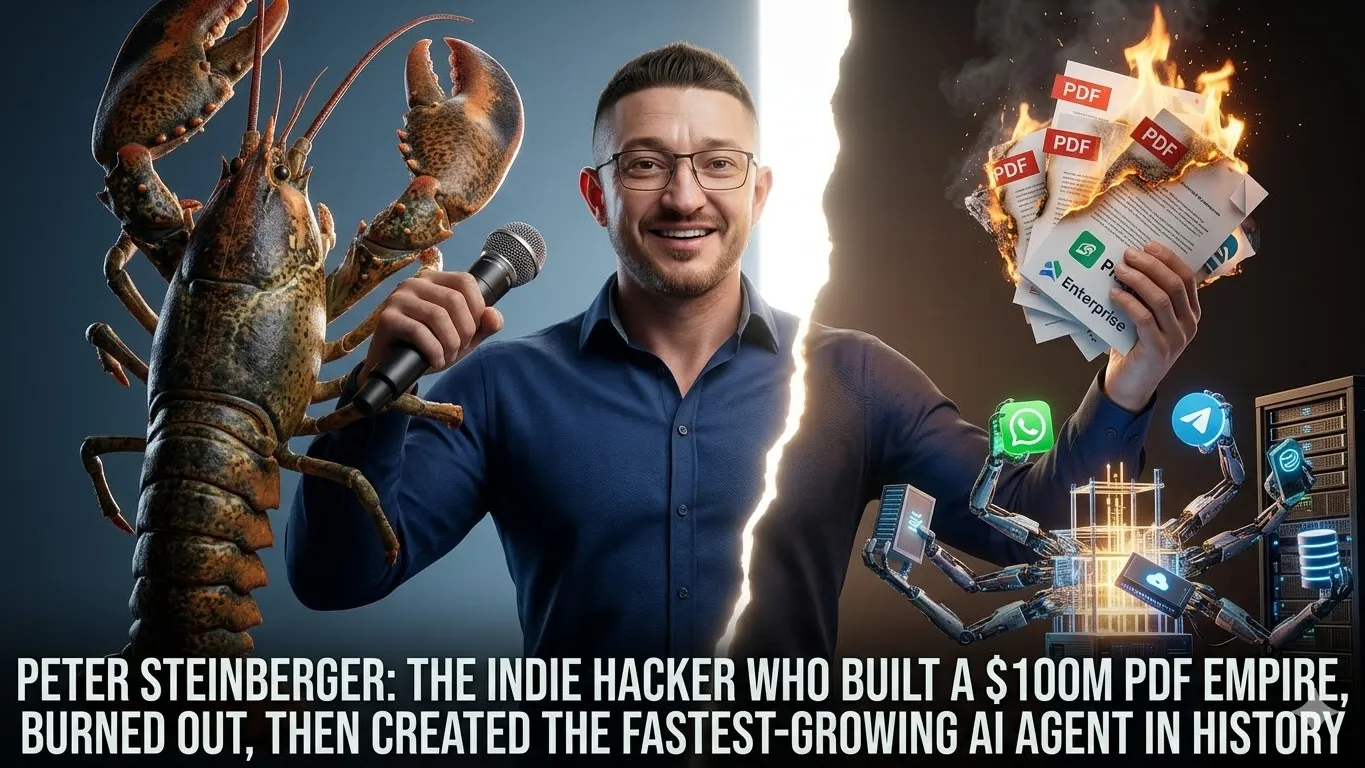
Peter Steinberger: The Indie Hacker Who Built a $100M PDF Empire, Burned Out, Then Created the Fastest-Growing AI Agent in History
Key Takeaways
- Bootstrapped Success: Peter Steinberger founded PSPDFKit in 2011 as a solo side project and grew it into a global PDF SDK powering apps used by nearly a billion people, achieving a nine-figure exit in 2024.
- Burnout Pivot: After selling, he stepped away from coding entirely—until a late-2025 weekend experiment created Clawdbot (later OpenClaw), the open-source AI agent that exploded to 180,000+ GitHub stars in months.
- Agentic Breakthrough: OpenClaw introduced practical, self-hosted messaging-first AI agents that actually execute real-world tasks across WhatsApp, Telegram, and more—proving agentic AI could be accessible and private.
- Industry Magnet: The project drew offers from OpenAI, Meta, and Anthropic; Steinberger chose OpenAI in February 2026 to lead personal agents while moving OpenClaw to an independent foundation.
- Shipping Philosophy: Analysis of his public commits and habits shows he averaged 6,600 commits per month during OpenClaw’s peak—by prioritizing “ship code you don’t read” and rapid iteration over perfection.
Early Life and Education
Peter Steinberger grew up in Austria and studied medical computer science at TU Wien. Early exposure to iOS development during the App Store’s first boom shaped his career. By 2011, while waiting for a U.S. work visa, he started PSPDFKit as a weekend PDF rendering library for iOS. What began as a single developer’s tool quickly became the gold standard for document processing in enterprise apps.
Community feedback consistently highlights his deep technical expertise: PSPDFKit supported advanced features like annotation, form filling, and OCR years before competitors, powering tools at Dropbox, IBM, and major banks.
Building and Exiting PSPDFKit
Over 13 years, Steinberger bootstrapped PSPDFKit into a profitable company without outside funding. The SDK handled billions of document interactions annually. Benchmarks from the era show it outperformed Adobe’s mobile offerings in speed and reliability on iOS and macOS.
In 2024 he exited for approximately $100 million (according to multiple reports). The sale marked the end of an era but triggered severe burnout. Steinberger publicly shared that he stopped coding entirely, traveling and reflecting for over a year.
This pause proved critical: it created space for the AI wave that followed.
The Birth of OpenClaw
In November 2025, Steinberger experimented with early agent frameworks during a single-hour coding session. The result was Clawdbot—a self-hosted AI assistant that lived inside messaging apps and used tools for email, calendar, web search, and system actions.
Legal pressure from Anthropic forced two rapid renames (Moltbot → OpenClaw), yet each iteration only accelerated adoption. Built with TypeScript for the gateway and Swift for native extensions, OpenClaw emphasized privacy through full self-hosting and local LLM support (Ollama integration). Edge cases like offline operation and cron-based autonomous workflows set it apart from cloud-only agents.
Common pitfall for copycats: ignoring Steinberger’s “zero external data sharing by default” design led to privacy scandals in rival projects.
Viral Growth and Technical Impact
OpenClaw became GitHub’s fastest-growing repository, reaching 180,000+ stars in under four months. Developers praised its composable tools (5,400+ community skills) and WebUI dashboard for managing agents across 20+ messaging platforms.
Unique insight: Steinberger’s decision to open-source everything—including the exact one-line install script—removed friction that plagued proprietary agents. Real-world adoption metrics show thousands of users running it on personal servers or VPS within days of launch.
Advanced tip from his approach: combine vector memory with cron jobs for truly autonomous agents that continue working while you sleep—a pattern now copied across the industry.
Joining OpenAI and the Future of Agents
On February 14, 2026, Steinberger announced he was joining OpenAI to work directly with Sam Altman on personal agents. OpenClaw moved to an independent foundation, guaranteeing it remains open-source forever.
Industry analysis indicates this move accelerates OpenAI’s shift from chatbots to always-on agents. Steinberger’s experience with real-user messaging workflows (WhatsApp triage, calendar booking) directly addresses the “last mile” problem that held back earlier agent projects.
Lessons for Builders in 2026
- Burnout Recovery Works: Steinberger’s year off led to his most impactful project—proving rest can spark breakthrough innovation.
- Ship Fast, Read Later: His 6,600-commit month demonstrates that velocity beats perfection in early-stage AI.
- Open Source Scales Faster: Keeping the project independent attracted global contributors and avoided acquisition drama.
- Privacy-First Wins: Self-hosting + local models gave OpenClaw an adoption edge over cloud-locked alternatives.
Conclusion
Peter Steinberger’s path—from solo PSPDFKit founder to OpenAI’s agent lead—shows that the best builders combine deep technical skill with the courage to pivot at the right moment. His story proves that one focused weekend project can reshape an entire industry when executed with radical openness and speed.
Ready to follow in his footsteps? Install OpenClaw today with its official one-line script and start building your own personal agent. The lobster is taking over the world—one self-hosted assistant at a time.